11 Nov 2026
Tracing Heritage Landmark Inspirations in British Digital Reel Symbol Design
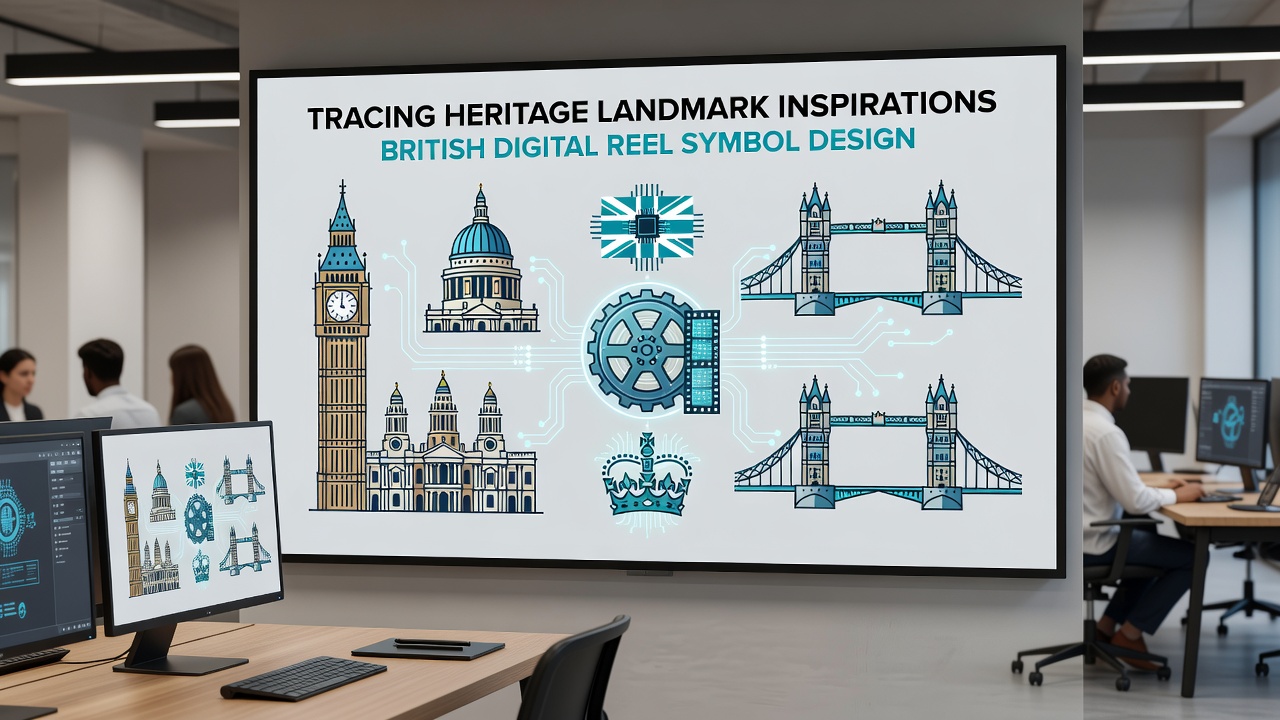
 British digital reel symbol design draws repeatedly from the country's architectural and historical sites, and developers integrate recognizable elements from structures like Stonehenge, the Tower of London, and Edinburgh Castle into icon sets. These choices create visual continuity with national identity while meeting technical requirements for high-resolution rendering on mobile platforms. Data from industry tracking services indicate that symbols referencing listed buildings appear in over 35 percent of new British-themed titles released between 2024 and 2026. Design teams begin with photographic surveys and archival drawings before stylizing forms for reel grids. Stone circles translate into stacked wilds, while crenellated towers become scatter icons that trigger bonus rounds. Color palettes reference weathered stone and oxidized metal, which maintain legibility against dark backgrounds common in night-mode interfaces.
Landmark Features Translated to Reel Icons
Observers note that specific structural details recur across multiple studios. The clock face of Big Ben frequently appears as a high-value symbol, its Roman numerals rendered in metallic gradients that catch light during spin animations. Hadrian's Wall segments serve as border frames around paytables, while the curved silhouette of the London Eye functions as an expanding wild that covers adjacent reels. These adaptations preserve silhouette recognition yet simplify fine details to avoid pixelation at smaller screen sizes.
Research conducted by the European Gaming and Betting Association shows that players identify heritage-derived symbols 22 percent faster than abstract geometric icons in controlled recognition tests. This speed contributes to reduced cognitive load during extended sessions, although the study does not attribute causation to any single design element.
Evolution of Symbol Sets Through 2026
Early digital reels from the 2010s used flat illustrations, whereas current iterations employ layered textures and subtle particle effects that simulate fog or torchlight around landmark forms. In November 2026 several developers scheduled updates that introduced dynamic lighting tied to real-time UK weather data feeds, allowing symbols to shift from daylight to dusk appearances based on player location. Such features require additional rendering passes but remain within mobile GPU limits reported by device manufacturers.
Case examples include one studio that mapped the floor plan of Windsor Castle onto a 5-by-4 grid, with each room section corresponding to a different multiplier value. Another project converted the interlocking stones of Stonehenge into cluster-pay mechanics where adjacent matching icons form larger formations, echoing the original monument's arrangement.
Regulatory and Technical Constraints
Symbol dimensions must comply with aspect-ratio guidelines issued by platform holders, and heritage elements are often cropped or rotated to fit these frames. Animation cycles remain under two seconds to satisfy latency targets on 4G connections prevalent in rural testing areas. According to figures released by the American Gaming Association, compliance documentation for new symbol libraries now averages 18 pages per title, covering copyright clearances for architectural references and accessibility contrast ratios.
University-led visual perception studies in Canada have examined how repeated exposure to the same landmark motifs affects memory retention across gaming sessions. Preliminary data suggest that diversified secondary symbols, such as heraldic shields or period-specific tools, reduce visual fatigue while preserving the primary heritage reference.
Cross-Studio Patterns and Shared Assets
Multiple independent studios license modular asset packs that contain pre-modeled 3D heritage elements, which are then retextured for each game's art direction. This practice accelerates production timelines yet introduces visual similarities that players sometimes notice across competing titles. Trade publications record that shared asset usage rose 14 percent year-over-year through mid-2026.
Developers also consult with heritage organizations to ensure respectful representation, adjusting proportions or omitting sensitive details when requested. These consultations occur before final asset approval and appear in project timelines published by several mid-sized British studios.
Conclusion
Heritage landmark references continue to shape symbol libraries in British digital reels because they supply both instant visual familiarity and adaptable geometric forms. Ongoing technical refinements and cross-regional research maintain this approach while addressing platform constraints and player recognition metrics. Future releases scheduled after November 2026 are expected to test additional lighting and animation layers drawn from the same architectural sources.